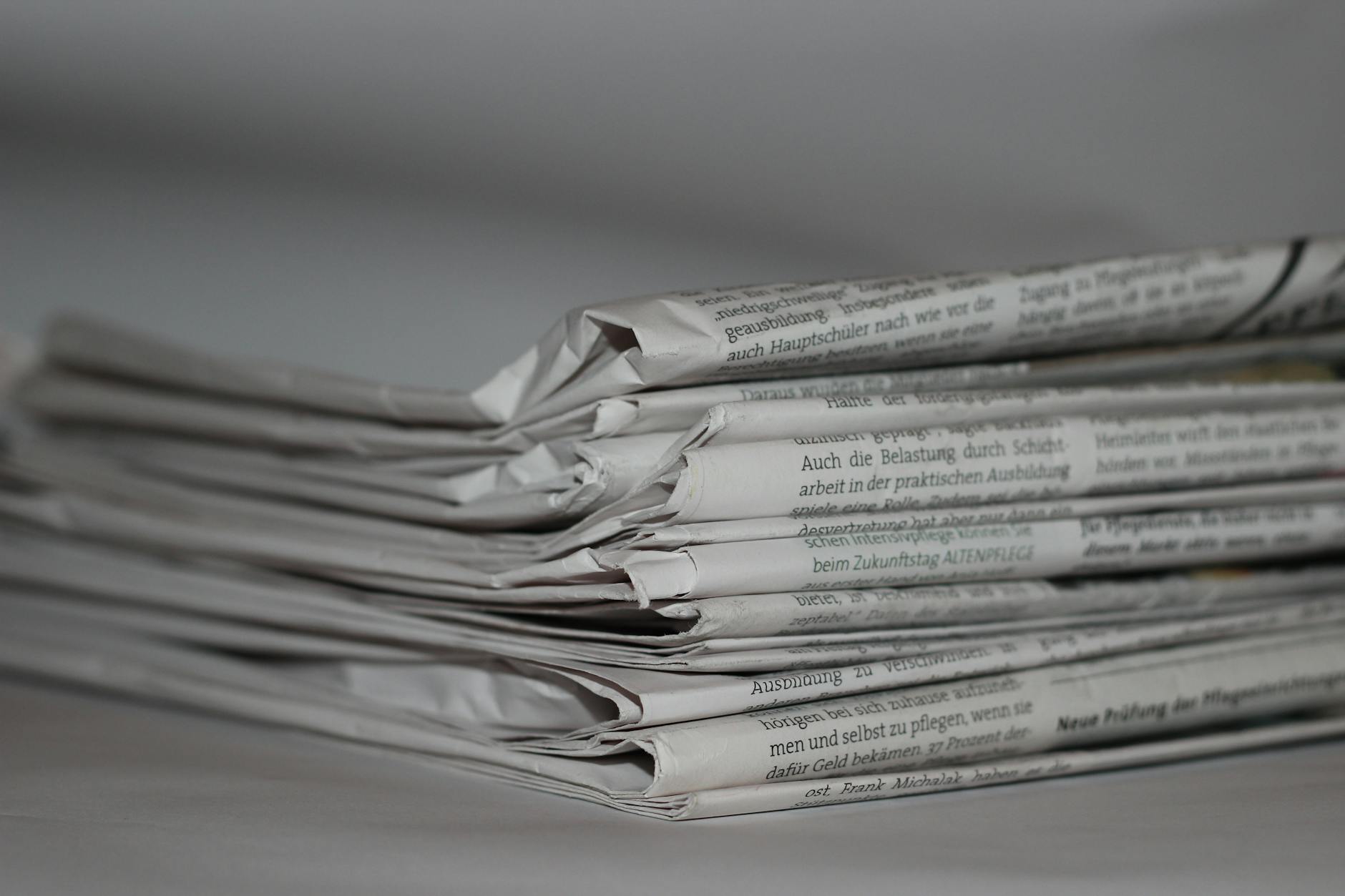
Printing the News Daily
I work overnight at a regional newspaper printing facility, where most people never see what happens between deadline and delivery. I pay attention to small details, last-minute changes, and the stories that almost made it onto the page. I write about work, routine, and the strange things you notice when the rest of the world is asleep.
"My Story"
I start my shift when most people are locking their doors and checking alarms. The parking lot outside the press building is usually empty except for my car and one other guy who works binding. The air smells like ink and damp paper before I even get inside. That smell sticks to your clothes. I used to notice it more. Now it just feels like part of me, like lint in a pocket you stopped trying to clean out.
The presses do not roar right away. They warm up slow, like they are waking from a nap they did not want to take. I go through the checklist without thinking too hard. Plates aligned. Ink levels steady. Roll tension right. I have learned not to rush even when the clock is loud in my head. If you rush, you miss something small, and small things matter here more than people realize. A missing letter in a headline can hold up an entire truck.
People imagine newspapers as finished things. You read them over breakfast and assume they arrived whole and confident. What I see is how unsure everything is right up until the last minute. A reporter runs across the floor waving a printout. An editor leans over a light table with a pen, crossing out a sentence and replacing it with something shorter. Someone yells that a council member's name is wrong again. We stop the press for that. Always for that.
On slower nights, when the big stories are already locked, I read the briefs. They sit in a stack near my station, waiting to be fed into the layout if space allows. Most of them never make it. A power outage on Maple Street that lasted three hours and then came back on. A zoning dispute that got tabled because two members did not show up. A school board meeting that ended early after people walked out. These pieces do not feel finished. They feel like the middle of something, cut loose and left behind.
I think about that a lot while watching pages move through the machine. The paper keeps going forward even when the story does not. That is the part that sticks with me. We print outcomes when there really are not any yet. Or we print pauses and pretend they are endings. I guess readers want closure with their coffee. I get that. But working here has made it hard for me to believe that most things ever really end cleanly.
There was a night a delivery truck sat outside for nearly twenty minutes because of one paragraph. It was a short thing about a local business owner stepping down. Someone caught that the reason given was wrong. Not wrong in a huge way, but enough. The reporter had misunderstood a quote. Phones came out. Editors argued quietly. I stood there waiting with the press idle, listening to the hum of the lights overhead. When the new paragraph came down, it felt smaller somehow, like it had lost something honest in the fixing. But it was accurate, and that is what counts.
Accuracy is heavy in this building. You can feel it. It slows everything down. It also trims things into shapes that fit the page, whether they want to or not. Watching that happen every night has changed how I think about where ideas come from. People talk about sitting down and forcing creativity, but I do not see it that way anymore. I see fragments everywhere. Half stories. Loose ends. Moments that stop right when they get interesting.
I used to think you had to invent something whole for it to matter. Now I am not so sure. Most nights I am surrounded by proof that unfinished things are everywhere, just waiting for someone to notice them. A postponed vote is not nothing. It is a pause with weight. A brief about a canceled event still tells you something about the town and the people in it. You just have to be willing to look at what is missing.
There is a moment late in the shift when the presses are running steady and no one is shouting. That is when my mind drifts. I watch the pages stack and think about how many directions each one could have gone. A longer quote that got cut. A background detail that did not fit. A follow up that will never be written because attention moved on. Standing there, it becomes obvious that story ideas are not rare or precious. They are constant. What is rare is space.
I started jotting notes during breaks, nothing fancy. Just phrases. A line about a street losing power. A sentence about a meeting that ended early. I am not trying to turn them into anything right away. I just do not want to forget how many things stop halfway through something larger. Seeing that every night has made me less afraid of starting without knowing where I am going.
I did not learn this from a class or a book. It came from watching real words get trimmed and shifted until they fit between margins. Still, there was a point where I wanted to see if what I was noticing had any shape beyond my own head. One night, during a slow stretch when the presses were running clean and no one needed me, I pulled my phone out and searched the same way people do when they are not sure what they are looking for yet. I landed on a page of story ideas and started scrolling without much expectation.
I stayed on that page longer than I meant to because the ideas themselves were solid. Simple starting points, but not flat ones. I clicked into a few posts that had been written from those ideas and was surprised by how far people took them. The original prompts were small, but the finished pieces were not. They grew into scenes, arguments, histories, and moments that felt real, not forced. It reminded me of what happens here when a short brief turns into a full page once a reporter gives it proper attention.
The presses keep running whether the stories feel done or not. That is the job. Mine is to make sure the paper comes out clean and readable. What it has quietly taught me is that most meaning lives in what gets cut, paused, or left hanging. Once you notice that, it is hard to stop seeing it everywhere.
By the middle of the night, the building settles into a rhythm that feels almost personal. The presses thump steady, the conveyors click, and the air grows warmer from the machines doing what they have done for decades. I know which bolts squeak when the temperature drops and which rollers complain if you ignore them too long. People think the job is loud chaos, but most of it is listening carefully. You can hear when something is off before you see it.
Around one or two in the morning, editors start to relax a little. The big headlines are locked, the photos chosen, and the front page is no longer up for debate unless something truly strange happens. That is when the smaller pieces either find a home or get cut loose. I watch them slide off the board quietly. No announcement. No ceremony. Just gone. Those are the moments that stay with me.
I remember a brief about a volunteer fire department drill that got bumped for space. It was well written, clean, and kind. It just did not fit. Another night, a short item about a planned road closure disappeared because a last minute sports result needed the space. These things happen all the time. No one is wrong. There is just not enough room. Working here has made me realize how much life is shaped by that same limitation.
When you stand next to a machine that forces everything into exact columns, you start noticing how much trimming happens everywhere else too. Conversations end early. Projects stall. Plans get delayed and then forgotten. Most nights, I am surrounded by proof that beginnings are easy and endings are rare. That is where a lot of creative energy hides, even if people do not call it that.
I do not think of myself as a writer, at least not in the way people usually mean it. But being here has given me a strange education. I see how a single sentence can change the weight of an entire page. I see how removing one detail can make a story feel flat, even if it is technically correct. Accuracy matters, but so does texture. You can feel when something has been sanded down too far.
There was a night when a reporter argued hard to keep a small quote in a city council story. It was from a resident who spoke near the end of the meeting, after most people had left. The quote was quiet and honest. It did not change the outcome of the vote, but it showed how someone felt about it. Space won, and the quote lost. The paper printed fine. The presses did their job. But I kept thinking about that voice that never made it out of the building.
That is when I started paying closer attention to what gets cut rather than what stays. It changed how I look at everything outside of work too. When someone tells me about an argument they had, I listen for the part they skip. When a project stalls, I wonder where it lost its momentum. It turns out those gaps are full of direction if you stop trying to fill them too fast.
A lot of people think you need a clean spark or a big moment to begin something. Standing here night after night has taught me the opposite. Most good starts are messy and incomplete. They come from noticing where something stopped. From picking up a thread someone else dropped because they ran out of room or time or patience. That is how I ended up thinking differently about story ideas in general. They are not finished products waiting to be discovered. They are leftovers, pauses, and near misses.
Sometimes during a break, I flip through an early run copy and circle things with a pen. Not corrections, just notes for myself. A sentence that feels too neat. A headline that promises more than the article delivers. I am not criticizing anyone. I know how hard it is to make something fit. I am just collecting examples of where reality got trimmed to behave.
The building is quietest just before dawn. The last run finishes, and the trucks start pulling away one by one. I sweep paper scraps into a bin and wipe ink from my hands. There is always a strange calm then, like the night is exhaling. That is when the thoughts I pushed aside start coming back. The half stories. The events that stopped mid action. The details that mattered but did not make the cut.
I have learned not to chase them too hard. I just let them sit. They pile up the same way unused briefs do. Eventually, one of them connects to something else, and suddenly there is a shape forming. Not a neat one, but a real one. That feels more honest than trying to force a clean arc.
Working this job has taught me patience in a way I did not expect. You cannot rush a press without paying for it. You also cannot rush meaning. Most nights, the best thing you can do is notice what almost happened and leave room for it to matter later. That is where the next direction usually shows up, whether you are looking for it or not.
I used to think the most important part of my job was speed. When I first started, I watched the clock more than the machines. I wanted to prove I could keep up, that I could handle last minute changes without slowing things down. Over time, that wore off. You realize pretty quickly that moving fast does not matter much if you move wrong. The press does not care about confidence. It only responds to what you actually do.
There is a spot near the end of the line where finished papers stack before they get bundled. I stand there sometimes and watch the pages land. It feels final in a way nothing else in the building does. Once they are stacked, there is no more editing. No more debate. Whatever made it onto those pages is what the town wakes up to. That finality sits heavy when you know how many other versions existed just minutes earlier.
Some nights, a breaking story comes in late enough to throw everything off. Phones ring. Editors lean over keyboards again. Plates get remade. Those are stressful moments, but they are also honest. Everyone knows something changed. What stays with me more are the quiet cuts. The ones no one argues over because there is no time or energy left. Those are the moments where things quietly disappear.
I remember a short piece about a library program losing funding. It was not dramatic. No protests. No shouting. Just a line item that went away. The brief explained it clearly, but it never ran. Space went to weather that night because a storm was coming. The next week, the program was gone. No follow up. No outrage. Just another thing that ended without much noise. Watching that happen taught me that importance does not always line up with attention.
That idea has followed me outside the building. When people ask me where I get ideas from, I never know how to answer without sounding strange. I want to say I get them from the things no one finishes talking about. From plans that stall. From sentences that trail off. Standing behind publication makes it hard to believe in clean beginnings and endings. Everything feels like a middle.
I think that is why I stopped waiting for a big moment to start anything of my own. I used to tell myself I would write something when I had a clear plan. Now I know that clarity usually comes after you begin, not before. Watching a paper come together every night shows you that most decisions are made under pressure, with incomplete information, and that is still enough to move forward.
There is a certain humility that comes with seeing your work folded into a system this large. I do my part well, but I am not the point. The story keeps moving whether I am here or not. That takes the pressure off in a strange way. It makes it easier to pay attention instead of trying to perform. I think that is where a lot of usable story ideas hide, in moments when you are not trying to impress anyone.
On breaks, some of us talk about what we read. Not the front page stuff, but the odd little pieces. A police blotter entry that raises more questions than it answers. A zoning notice that sounds harmless until you think about who it affects. These conversations never turn into anything official. They just linger. I have noticed that the things we keep talking about are rarely the ones that made the biggest splash.
There was a night when a school board meeting ended early because too many members left. The brief was three paragraphs long and dry. No drama. But the fact that adults walked out of a public meeting stuck with me. It felt unfinished, like a door left open. No one followed it up. The paper moved on. I did not. I kept thinking about why that moment felt heavier than the words used to describe it.
The longer I work here, the less interested I am in polished outcomes. I am more drawn to friction. To the places where something almost worked or almost fell apart. Those edges feel alive. They feel closer to how things actually happen. Clean narratives are comforting, but they are not very common.
Late in the shift, when the last edition is running, I sometimes slow my pace on purpose. Not enough to cause trouble, just enough to notice more. The sound of paper tearing slightly when tension is off. The smell of hot ink. The way everyone moves with practiced efficiency, even when they are tired. These details matter. They remind me that meaning comes from paying attention, not from forcing a result.
If this job has taught me anything, it is that you do not need a complete picture to begin. You just need to notice where something stopped and be willing to sit with that. The rest tends to show up when you are already in motion, whether you planned for it or not.
Around three in the morning, the tiredness changes shape. It is not the heavy kind anymore. It gets thin and sharp, like everything is edged just a little more than it should be. That is usually when mistakes try to sneak in. A plate set one slot off. A roll not seated quite right. I slow down more at that hour, even if it means someone gives me a look. I have learned that the quiet errors do more damage than the loud ones.
There is an old corkboard in the break area with clippings pinned to it. No one remembers who started it. Some of the articles are decades old, yellowed and curling at the corners. Others are from just a few months ago. They are not famous pieces. Most are strange or incomplete. A parade that got rained out. A factory opening that quietly closed two years later. Someone once pinned a headline that simply read Meeting Ends Without Decision. I stare at that one more than I probably should.
Working nights gives you a strange relationship with time. You are always slightly out of step with everyone else. While people are reacting to yesterday's paper, I am already watching tomorrow's version get shaped. It makes cause and effect feel closer together. You see how quickly something becomes history, even if nothing really changed.
I think that is why I stopped believing that creativity is about invention. What I see every night is selection. Choosing what fits and letting the rest fall away. That is not a complaint. It is just how space works. Pages are finite. Attention is finite. Most nights, the stories that linger are the ones that did not get chosen.
Sometimes a reporter comes back later and writes a follow up. Sometimes they do not. Life moves on either way. But those gaps add up. They form a kind of shadow record of the town. A list of things that mattered briefly and then slipped out of view. When you stand in the middle of that process, it changes how you look at everything else you consume.
I notice this when I read books now. I am less interested in tidy arcs. I pay more attention to what the author skips over. The jump in time. The unresolved tension. Those spaces feel honest to me. They remind me of the way real events unfold, with long stretches of nothing and sudden moments that never quite finish resolving.
On one shift, a junior editor asked me why I always read the briefs. I did not have a clean answer. I just shrugged and said they feel closer to how things actually happen. He nodded like he understood, but I am not sure he did. When your job is to turn chaos into something readable, you get used to sanding down edges. Standing on this side of the press, I see the sawdust piling up.
There are nights when nothing dramatic happens at all. No late breaking news. No shouting across the floor. Those nights teach you just as much. You realize how much effort goes into maintaining the illusion of stability. Every paper that comes out on time reinforces the idea that things are under control, even when they are not. That contrast stays with you.
I keep a small notebook in my locker. It is stained with ink and bent at the corners. I do not write full thoughts in it. Just fragments. A phrase from a meeting recap. A note about a canceled event. A reminder that something ended quietly. I do not label them. I do not organize them. They are not meant to become anything right away.
Looking back through it recently, I noticed how often the entries stop mid sentence. I do not even remember why. Maybe the bell rang for the next task. Maybe I got distracted. It feels fitting. Those unfinished lines mirror the work itself. They are small markers of attention rather than plans.
I think a lot of people struggle because they believe they need a clear destination before they begin. Watching this place operate has cured me of that idea. Most of what matters gets assembled under pressure, using whatever is available at the moment. The paper still prints. The trucks still roll. The town still wakes up and reads.
That understanding has made me more comfortable sitting with uncertainty. When I hear people talk about needing better story ideas, I want to tell them to pay attention to where things stall. That is where energy collects. Not in the final headline, but in the version that never quite made it to print.
As the shift winds down and the presses quiet, I feel that familiar mix of relief and restlessness. Another edition finished. Another set of choices locked in. Somewhere, someone will read a line and assume it represents the whole truth. Standing here, I know better. Truth is spread across all the versions that did not fit.
By the time dawn starts leaking through the high windows, the building feels hollowed out. The presses are quieter, cooling down like animals that finally decided to rest. The floor is speckled with ink and paper dust, and my boots stick slightly when I walk across certain spots. That stickiness tells me more about the night than any report ever could. It means we pushed hard. It means changes came late.
This is usually when the younger operators start talking about what they will do after work. Sleep. Errands. A quick stop at the store before the day crowds show up. I mostly listen. My mind is still half inside the pages we just printed. Once you have watched something come together in pieces for hours, it does not switch off easily.
I think about the way readers assume intention. They see a layout and believe it was planned that way from the start. They do not see the sentence that got shortened because it ran long. They do not see the quote that vanished because it pushed the column down too far. They do not see the version that almost ran but lost a coin flip against weather coverage. From the outside, it all looks deliberate.
Standing on this side of things has made me suspicious of anything that feels too clean. I trust rough edges more. I trust pauses. When someone tells me they are stuck, I usually ask what they stopped paying attention to. That question has come up for me more than once when I sit with my notebook open and nothing obvious wants to happen.
Some nights, after the last truck pulls out, I stay a few minutes longer than I need to. I flip through a finished copy and try to remember how many hands touched each page. The reporter who chased a quote. The editor who trimmed it down. The designer who shifted a photo half an inch. Me, making sure it all printed clean. None of us owns the whole thing. We just carry it for a while.
That has changed how I think about story ideas in my own life. I no longer wait for a clear voice or a strong opinion. I wait for friction. For the moment where something does not line up cleanly. Those moments feel honest. They feel earned. Watching the paper come together every night has trained me to notice those points without trying to fix them too fast.
There was a night not long ago when a local vote got postponed for the third time. The brief ran, short and factual. No one complained. But the repetition caught my attention. Delay after delay, with no resolution in sight. That felt like a pattern worth noticing. Not because it was dramatic, but because it kept happening quietly. Those quiet repetitions are everywhere once you start looking.
I have learned to carry those observations lightly. Not everything needs to turn into something. Some details just want to be seen and left alone. Others stick around. They show up again in different forms. A canceled meeting echoes in a stalled project. A trimmed quote shows up later as a half formed thought. You begin to see how much of life operates on almosts and maybes.
People talk about originality like it is rare. From where I stand, it is constant. What is rare is attention. Most nights, the raw material is overflowing. It is the container that is limited. Pages end. Deadlines hit. The rest gets left behind. Understanding that makes it easier to begin without fear. You are not creating from nothing. You are selecting from excess.
As I finish my shift, I wipe down my station and hang my gloves by the locker. The building is brighter now, less secretive. Day crews will come in soon and talk about different things. Sports scores. Weekend plans. The paper I helped produce will already feel old to them. That is fine. It has done its job.
Walking out into the morning air, I often feel like I am carrying pieces of the night with me. Not the headlines, but the almost headlines. The sentences that ended too soon. The events that paused without resolution. Those fragments follow me around more than anything else. They remind me that most meaning lives in the middle of things, not at the end.
I used to think that was frustrating. Now it feels like a gift. When you stop demanding clean endings, you give yourself permission to start anywhere. That is something this job has taught me slowly, night after night, page after page.
By the time I get home, the sun is usually fully up. It feels wrong some mornings, like I slipped through a crack in the day and came out in the wrong place. I make coffee even though it does not feel like morning to me. The kitchen is quiet. The house still smells like night. I sit at the table and let my hands stop buzzing from the machines.
This is when the leftover thoughts show up. Not the big ones. The small, nagging ones. The meeting that ended early. The paragraph that got rewritten three times. The quote that never made it past layout. They come back without asking, like they want a little more attention before I sleep. I have learned not to fight that. I just let them pass through.
What working nights has really changed is my patience with clean explanations. I do not trust them much anymore. Too many times, I have watched a situation get simplified because there was no room to hold the whole thing. That does not mean the paper is lying. It means reality is bigger than the space allowed. Once you see that up close, it is hard to forget.
I think about how many people sit down hoping for clarity before they begin something new. They want certainty, direction, confidence. Standing behind publication taught me that most of those things are added later, if they show up at all. The process moves forward anyway. It has to. Trucks are waiting. Pages need to run. You learn to work with what you have.
That lesson seeps into everything. When I talk to friends who feel stuck, I notice how often they are waiting for permission from something invisible. A sign. A plan. A perfect starting point. I want to tell them that most beginnings look like interruptions. Like pauses. Like things that stop halfway through and leave a little space behind. That space is not empty. It is just unclaimed.
I never planned to think this way. It came from watching the same cycle repeat every night with small variations. A headline swapped. A sentence cut. A story held back for one more day and then forgotten. Patterns form when you see enough of them. You stop chasing novelty and start paying attention to structure. To what keeps happening quietly in the background.
If I had to explain what this job has given me, it would not be technical skill, though that matters. It would be a tolerance for incompleteness. A comfort with things that do not wrap up neatly. Once you accept that most stories live in the middle, it becomes easier to notice how much material is already around you.
That is where story ideas keep coming from for me now. Not from dramatic events, but from the way ordinary ones pause, stall, or get trimmed down until they barely resemble themselves. A postponed vote says something. A canceled program says something. Even a typo caught too late says something about pressure and care and time. You do not have to invent those moments. You just have to notice them.
Some mornings, before I finally go to bed, I flip open my notebook and add a line or two. Not to build anything yet. Just to mark that I saw something. A sentence fragment. A question I do not know how to answer. A reminder that something ended quietly. I close the notebook and leave it alone. That is enough.
I sleep through most of the day, then wake up with that familiar sense of being slightly out of step. By evening, I will head back in and do it again. Plates. Ink. Pages. Choices made and unmade. Another edition shaped out of excess. Another set of moments that almost went somewhere else.
I do not feel frustrated by that anymore. If anything, it feels steady. Reassuring. The work keeps showing me that meaning does not depend on resolution. It depends on attention. On being willing to look at what gets cut and ask why it mattered in the first place.
Tomorrow night, there will be another stack of briefs. Another handful of stories that end mid action. Another set of decisions that make things look finished even when they are not. I will be there, listening to the machines and watching the pages move forward, knowing that most of what matters never fully fits on the page.